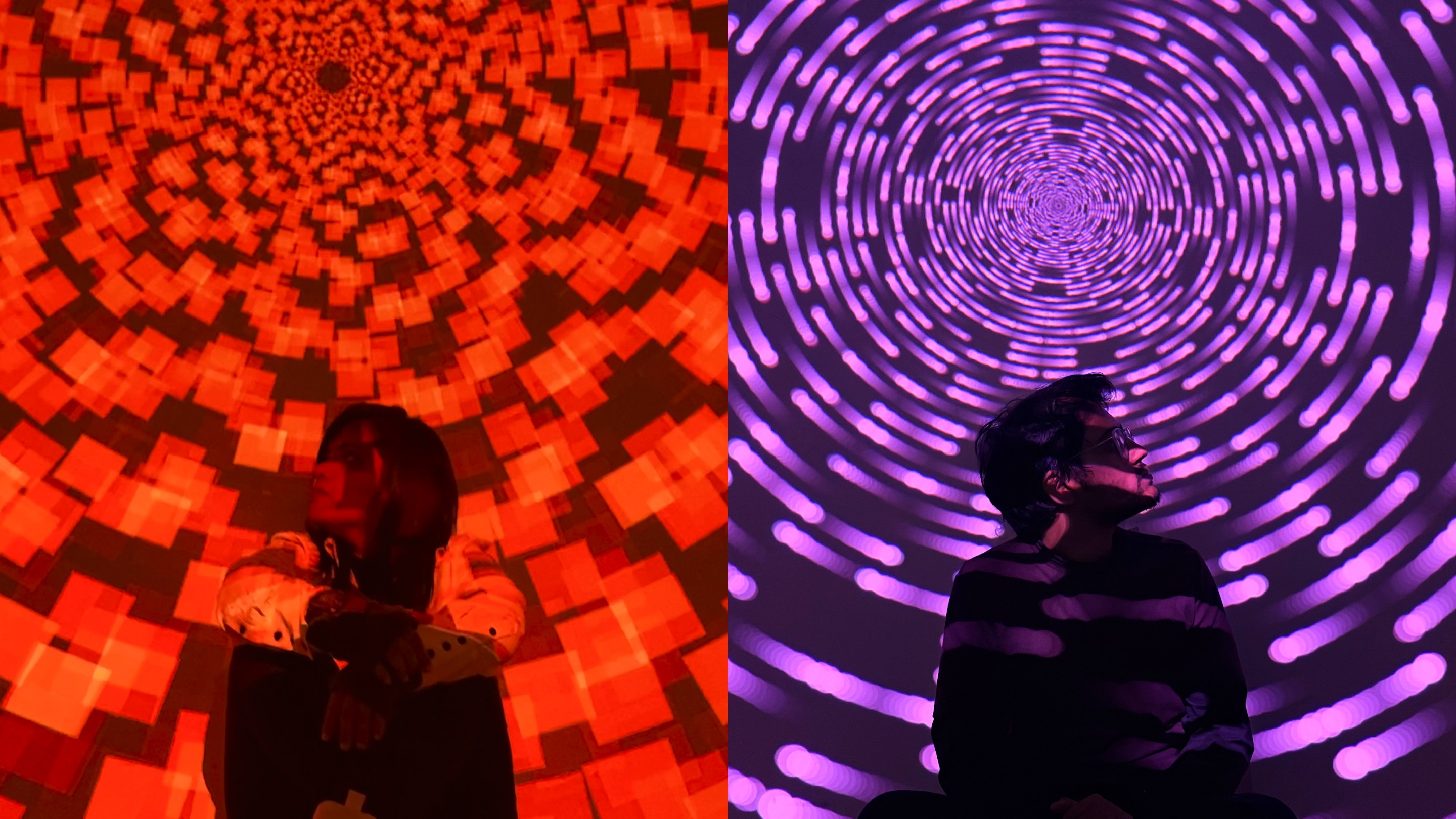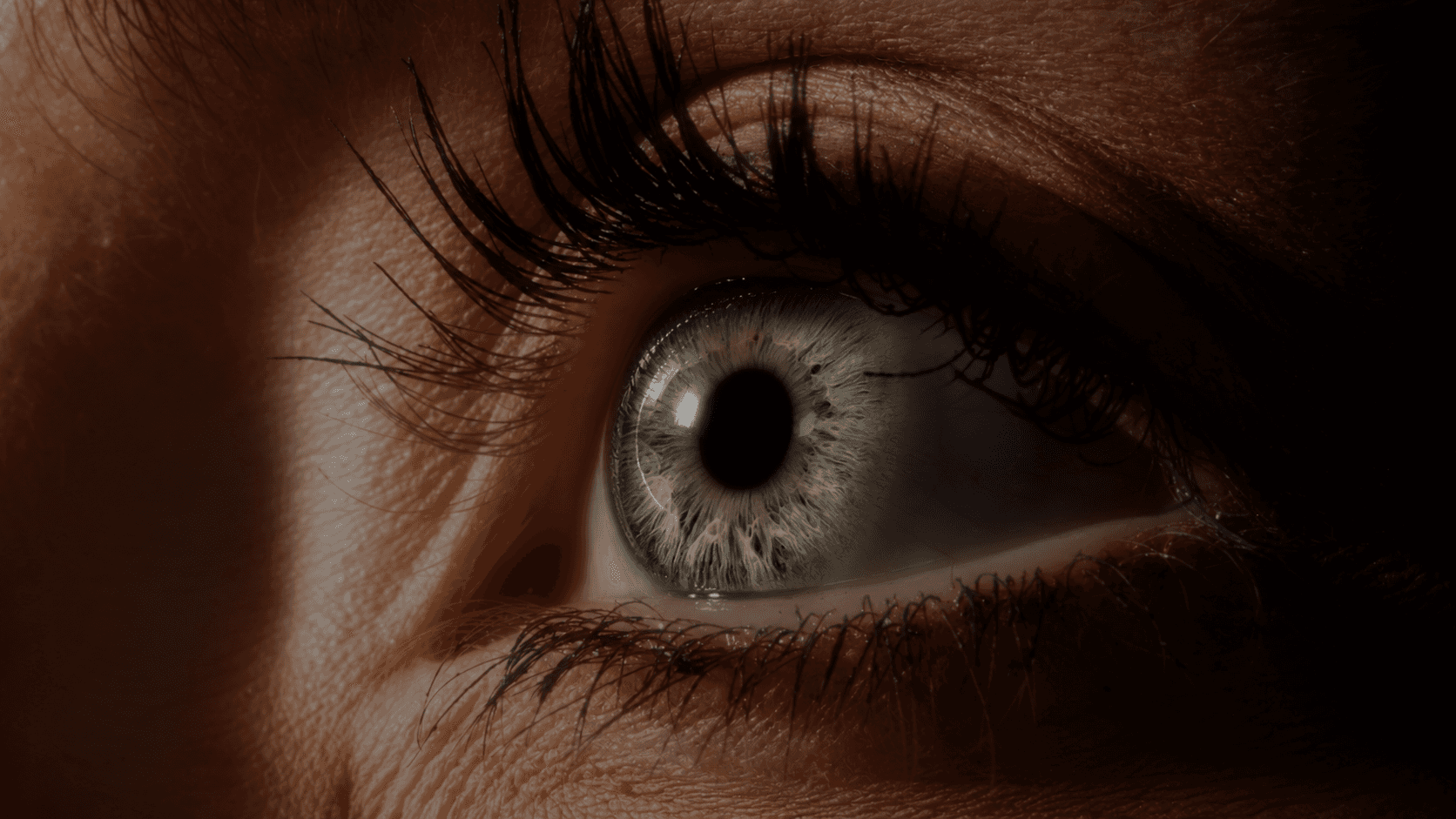
You’re not born with a good eye. You train it by training yourself to observe.

Attune
Attune
Attune is an AI-powered photography learning system designed to help beginners develop their eye. It brings guidance into the act of taking a photograph, helping learners notice light, composition and relationships within a scene, and make more intentional decisions about what they capture.
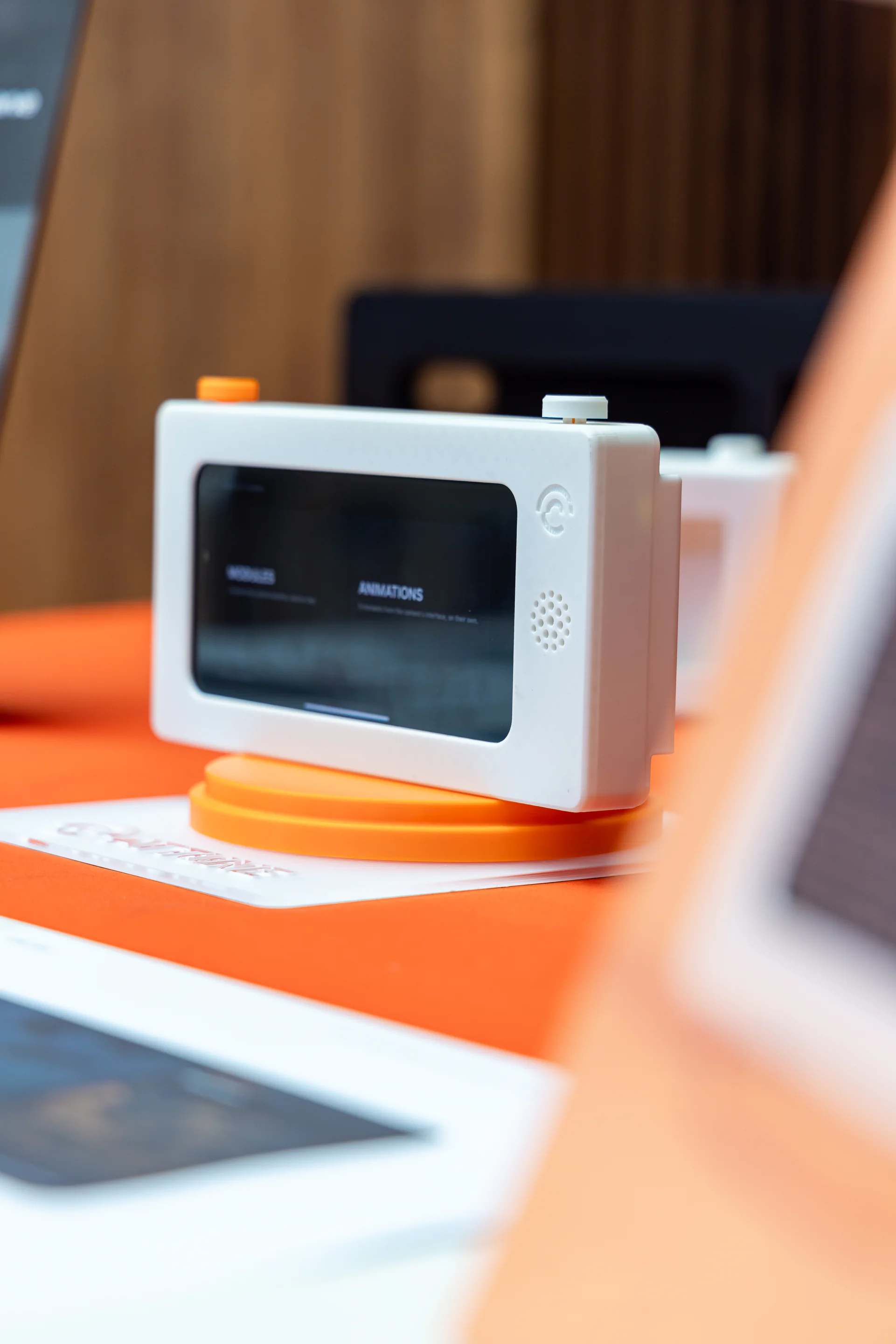
The experience connects a Creative Studio with a physical Practice Camera. The studio helps learners explore what draws their attention in photographs and shapes a starting direction for practice. The camera carries that direction into the field through visual cues and opportunities to experiment with the scene in front of them.
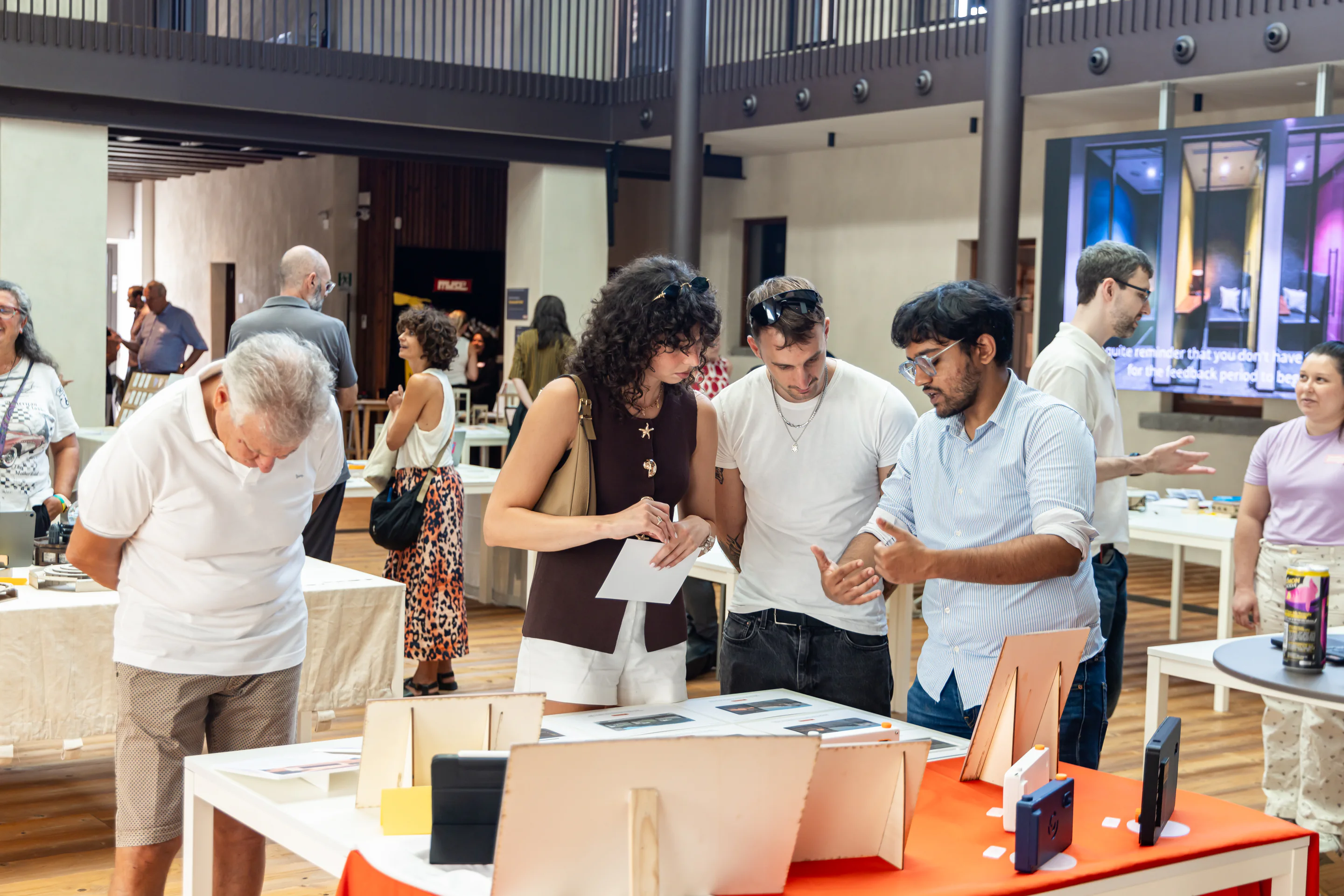
Developed as my final project, Attune explores how AI can support the growth of a skill while leaving creative decisions with the person learning. The aim is for guidance to become less necessary as photographers develop their own judgment and ways of seeing.
INSTITUTION
Copenhagen Institute of Interaction Design
COURSE
Final Project
DURATION
2 Months
YEAR
2026
TEAM
Individual project
ROLE
Concept, UI design, prototyping, presentation, documentation
Product film
THE WHY
AI can generate, enhance and correct an image in seconds. With a prompt, a person can describe what they want and receive a finished result, with the system making many of the visual decisions along the way.
For someone learning photography, that leaves a gap. A better result does not necessarily explain why an image works or what to notice in the scene. The photograph may improve without the person developing the judgment to make those decisions themselves.
THE REFRAME
What if AI helped improve the photographer instead?
What if AI helped improve the photographer instead?
What if AI helped improve the photographer instead?
Learning photography is about more than knowing how to use a camera. It means developing an eye: learning to notice light, recognise relationships within a scene, and decide what matters in the frame.
Learning photography is about more than knowing how to use a camera. It means developing an eye: learning to notice light, recognise relationships within a scene, and decide what matters in the frame.

RESEARCH INSIGHTS
Four ideas shaped
the direction of Attune
Four ideas shaped
the direction of Attune
Four ideas shaped
the direction of Attune
To understand how a photographic eye develops, I drew on perspectives from photography, filmmaking, visual art, design and AI.
I wanted to understand what experienced practitioners notice, what feels difficult when starting out, and where guidance can support learning. These perspectives informed four insights that became the starting point for my prototypes.
You’re not born with a good eye. You train it by training yourself to observe.
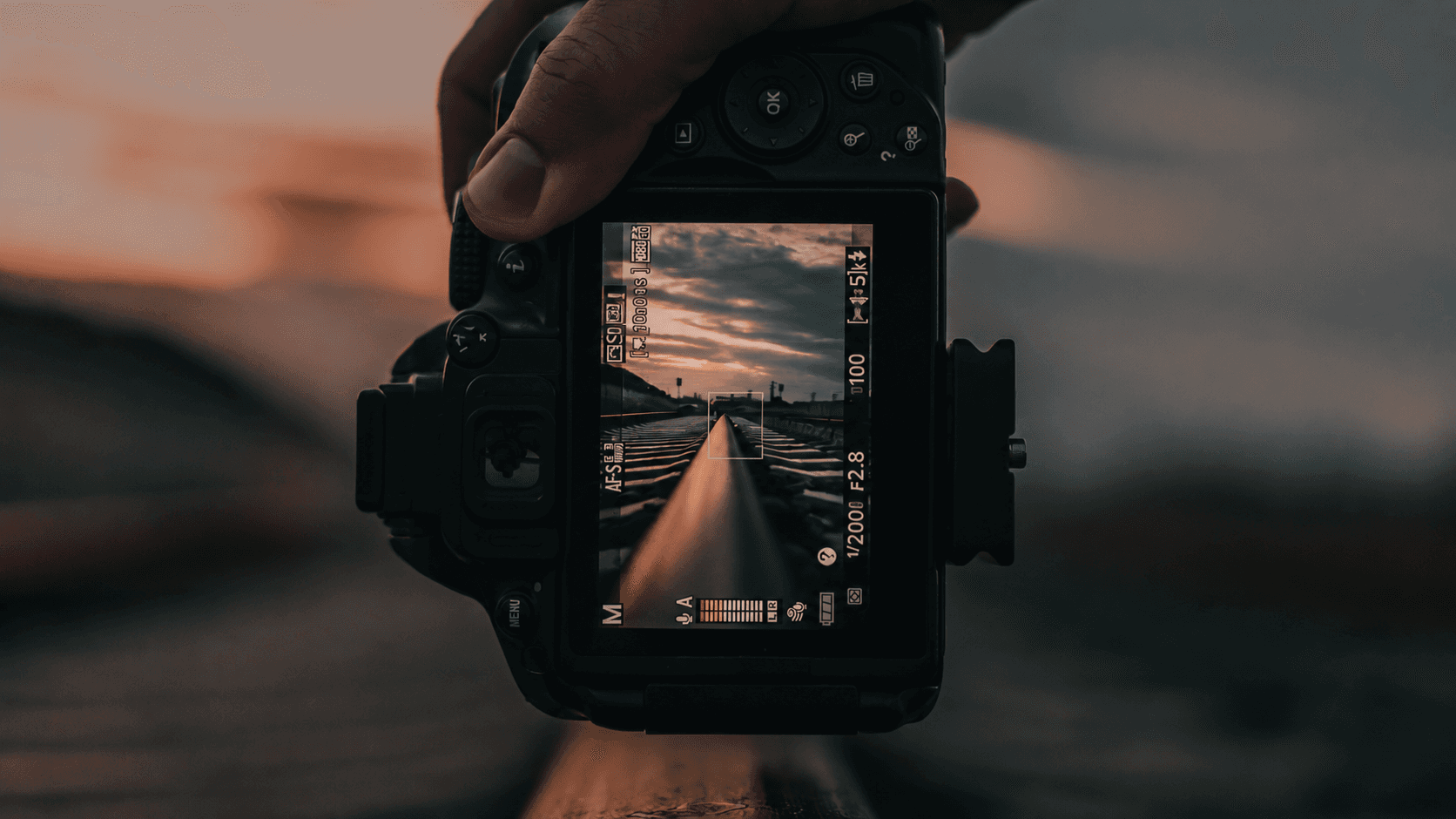
Learning happens faster when guidance arrives in the moment.
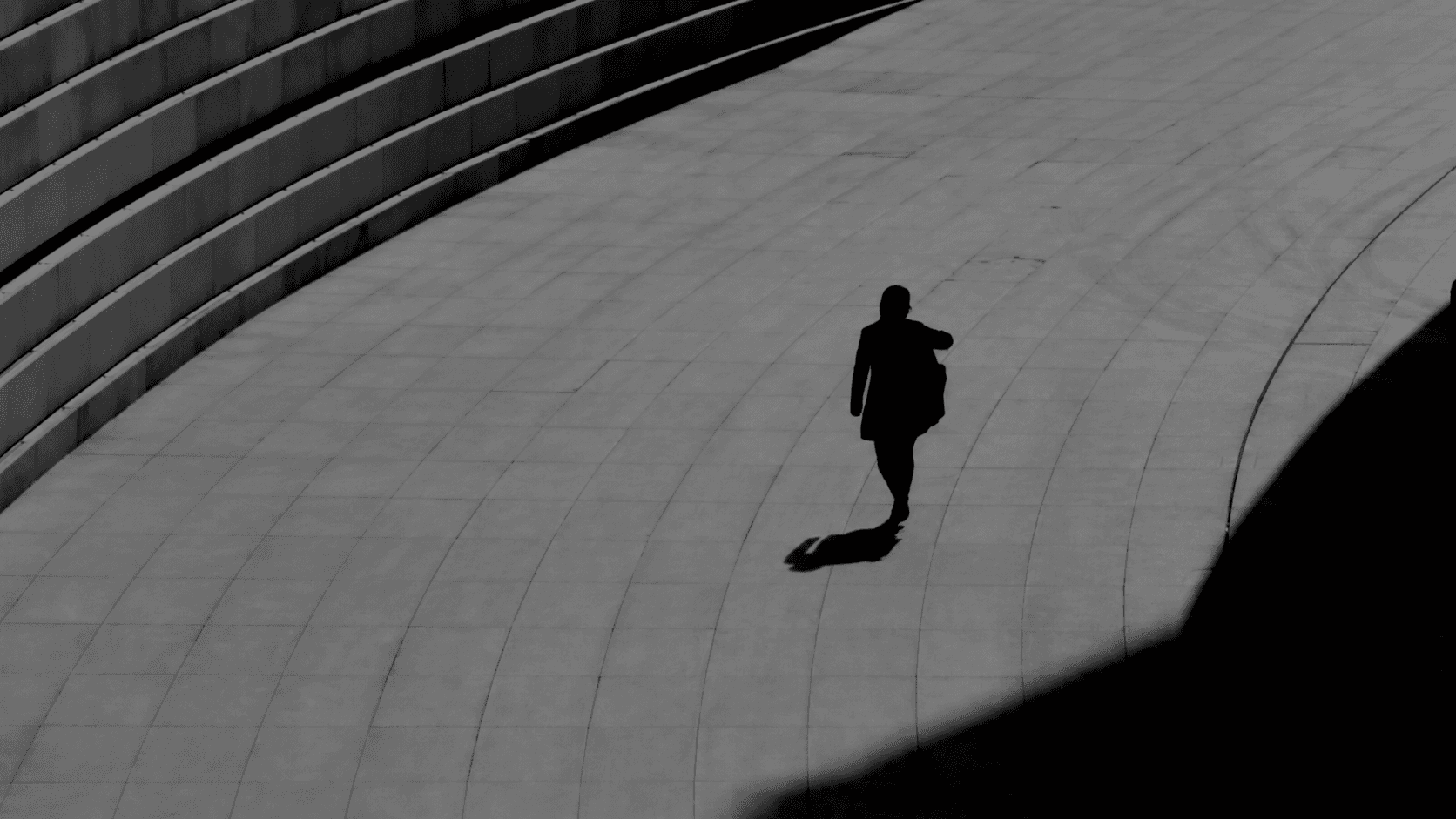
The hardest part isn’t knowing how to operate the tool. It’s having the vision to know what you want from it.
Feedback points out what your eye hasn’t learned to notice yet.
You’re not born with a good eye. You train it by training yourself to observe.
Learning happens faster when guidance arrives in the moment.
The hardest part isn’t knowing how to operate the tool. It’s having the vision to know what you want from it.
Feedback points out what your eye hasn’t learned to notice yet.
Design question
AI reveals
Eye notices
Photographer experiments
Photographer decides
Design question
AI reveals
Eye notices
Photographer experiments
Photographer decides
Design question
AI reveals
Eye notices
Photographer experiments
Photographer decides
PROTOTYPE 01
My first prototype tried to explain everything the system noticed
My first prototype tried to explain everything the system noticed
My first prototype tried to explain everything the system noticed
Prototype 1 began with a simple assumption: if AI could notice more, it should explain more. After each photograph, it returned feedback on composition, lighting, distractions, strengths and possible improvements, often all at once.
Prototype 1 began with a simple assumption: if AI could notice more, it should explain more. After each photograph, it returned feedback on composition, lighting, distractions, strengths and possible improvements, often all at once.
Very quickly, I saw the problem. The amount of feedback asked a beginner to interpret several judgments at the same time. More information did not necessarily provide a clearer next step, and photography, a visual practice, was being taught mostly through paragraphs.
Very quickly, I saw the problem. The amount of feedback asked a beginner to interpret several judgments at the same time. More information did not necessarily provide a clearer next step, and photography, a visual practice, was being taught mostly through paragraphs.
CAPTURE

FEEDBACK

PROTOTYPE 02
This prototype explored a more active way of learning. Instead of describing how a photographic choice affects an image, it allowed one variable, such as light, colour, time or an object, to change while the rest of the scene stayed consistent. Comparing the results made the relationship between a decision and its visual consequence easier to see.
This prototype explored a more active way of learning. Instead of describing how a photographic choice affects an image, it allowed one variable, such as light, colour, time or an object, to change while the rest of the scene stayed consistent. Comparing the results made the relationship between a decision and its visual consequence easier to see.


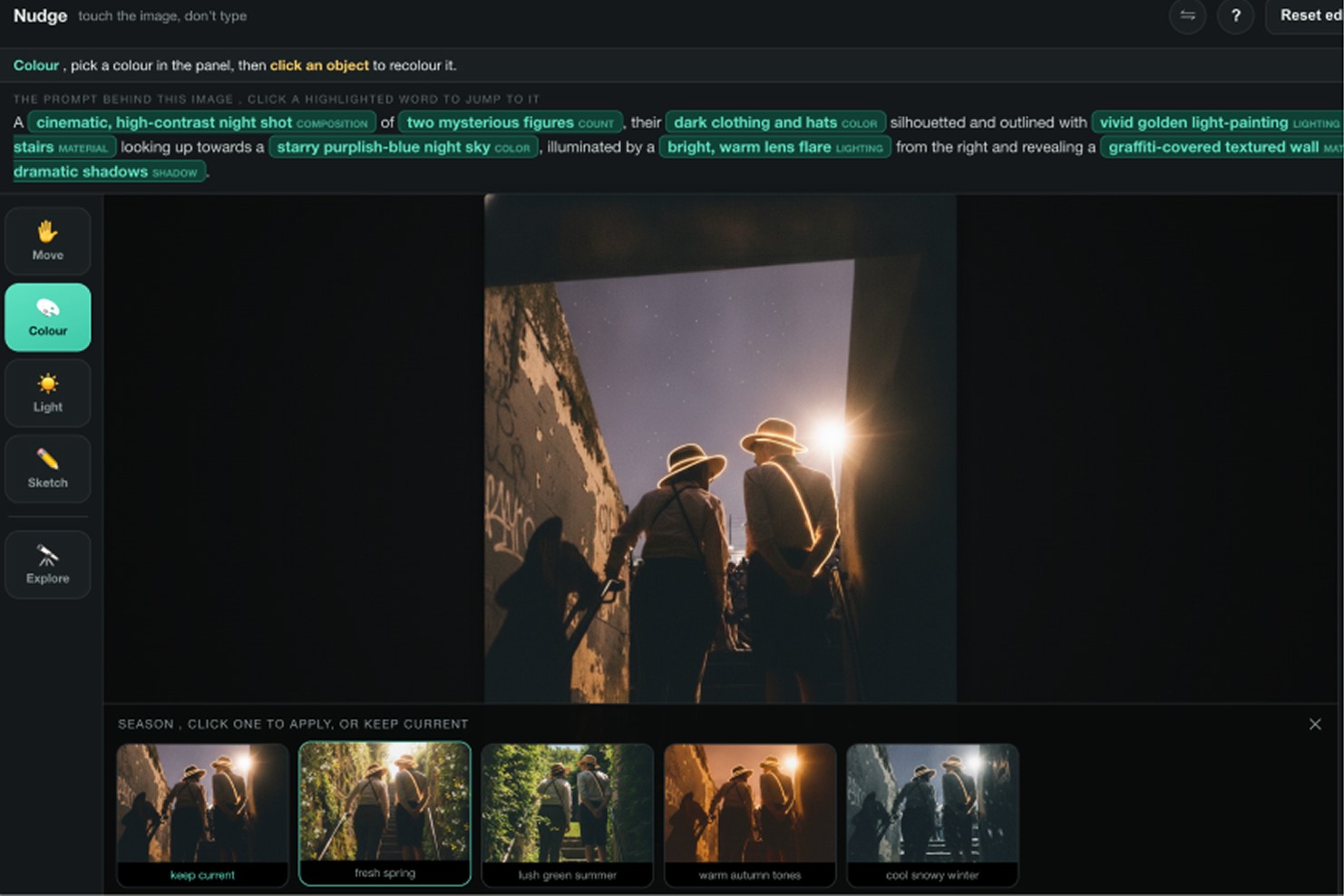

The point was to make cause and effect visible, not to edit the image.
The point was to make cause and effect visible, not to edit the image.
PROTOTYPE 03
I explored borrowing the perspective of photographers whose work is shaped by recurring decisions around light, framing, colour and timing. The useful part was making the patterns of attention behind a style visible, rather than copying the style itself.
I explored borrowing the perspective of photographers whose work is shaped by recurring decisions around light, framing, colour and timing. The useful part was making the patterns of attention behind a style visible, rather than copying the style itself.



PROTOTYPE 04
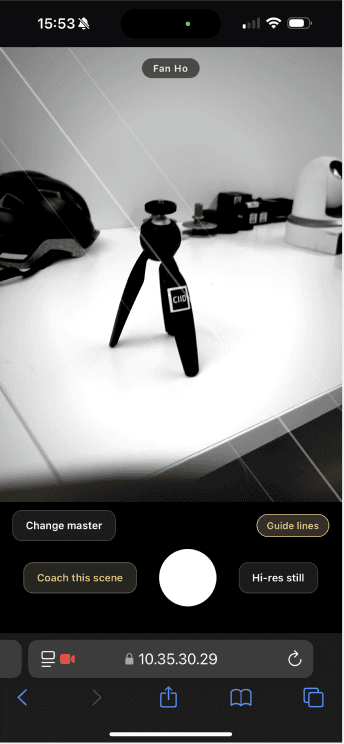
This prototype moved guidance from a separate learning interface into the live viewfinder. Instead of reviewing advice before or after taking a photograph, Attune could respond to the scene as it unfolded, using markers, overlays and visual augmentation to direct attention to relevant relationships while leaving the learner to decide what to change.
This prototype moved guidance from a separate learning interface into the live viewfinder. Instead of reviewing advice before or after taking a photograph, Attune could respond to the scene as it unfolded, using markers, overlays and visual augmentation to direct attention to relevant relationships while leaving the learner to decide what to change.

PROTOTYPE 05
I experimented with live visual overlays that temporarily exaggerated specific characteristics of a scene, such as edges, contrast, light distribution, spatial structure and tonal relationships. Instead of explaining these concepts through text, the viewfinder could show them directly within the photograph.
I experimented with live visual overlays that temporarily exaggerated specific characteristics of a scene, such as edges, contrast, light distribution, spatial structure and tonal relationships. Instead of explaining these concepts through text, the viewfinder could show them directly within the photograph.


What the prototypes taught me
The camera that grows with you
Reveal complexity gradually as the learner progresses.
Reveal complexity gradually as the learner progresses.
Design for independence, not dependence
The system should become less necessary as the user’s own eye and perception become stronger.
The system should become less necessary as the user’s own eye and perception become stronger.
Guidance in the moment
Instead of analysing the photograph afterwards, guidance should appear in the moment, while the learner can still move, reframe, experiment and see what changed.
Instead of analysing the photograph afterwards, guidance should appear in the moment, while the learner can still move, reframe, experiment and see what changed.
PHYSICAL PROTOTYPES
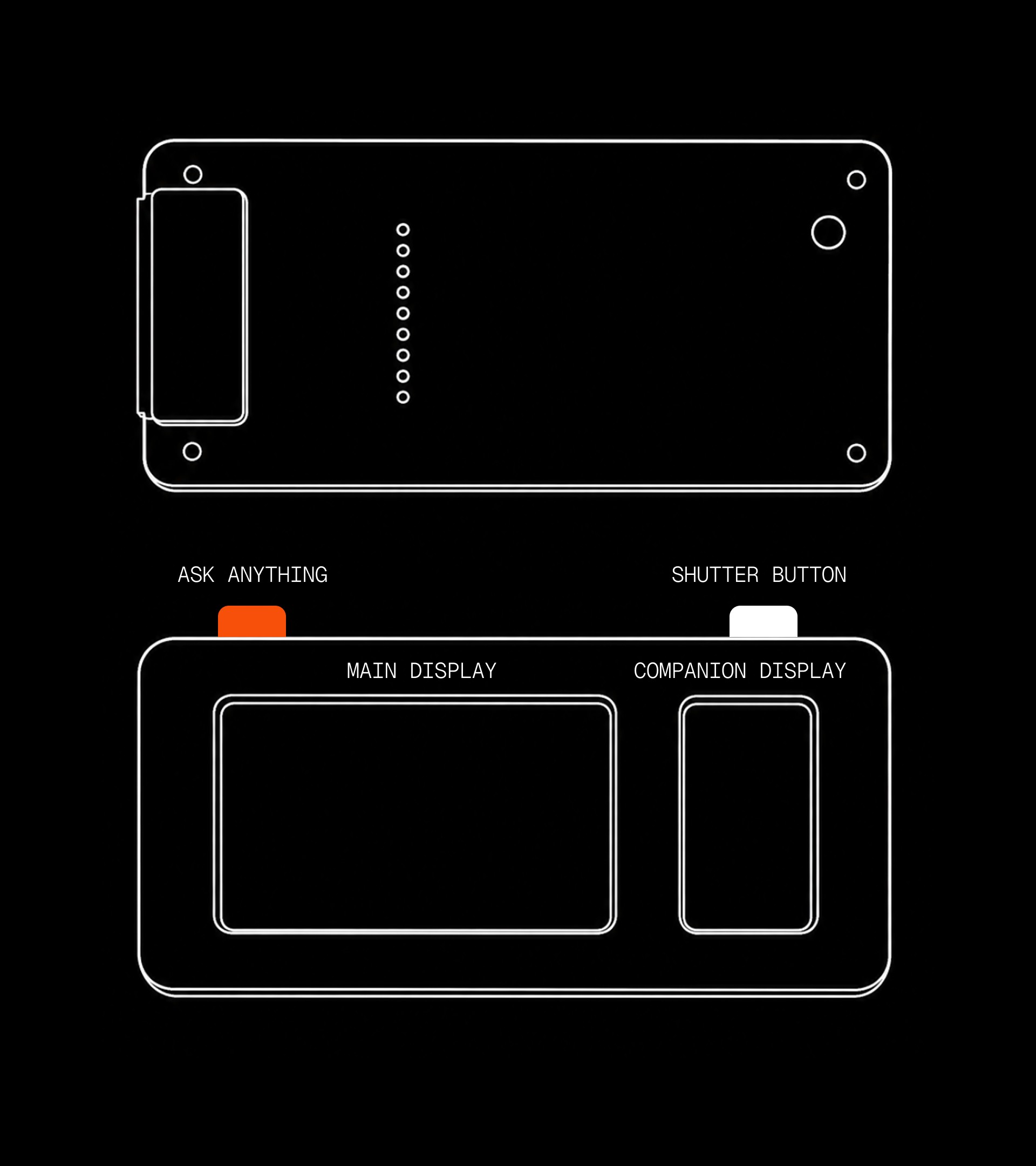
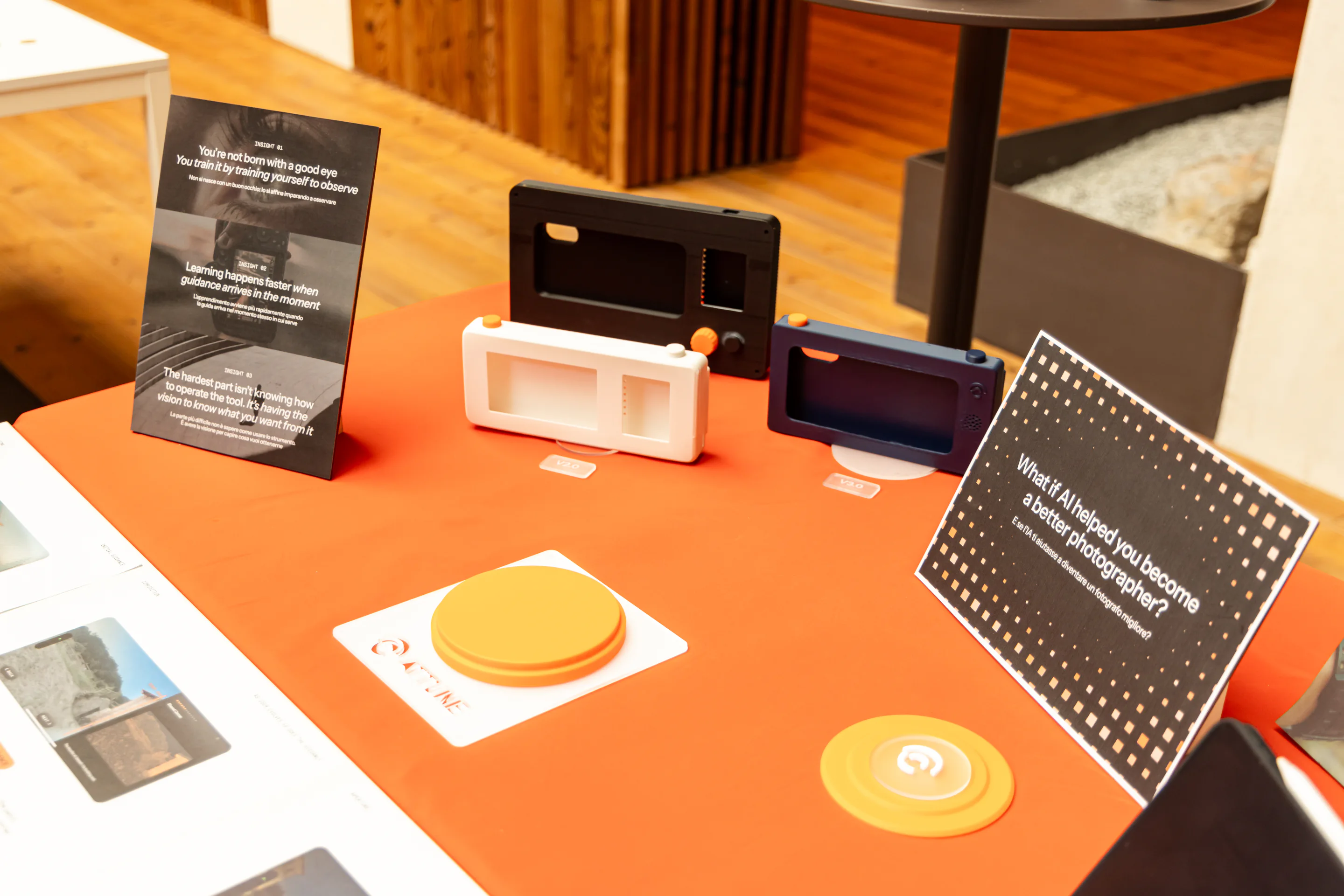
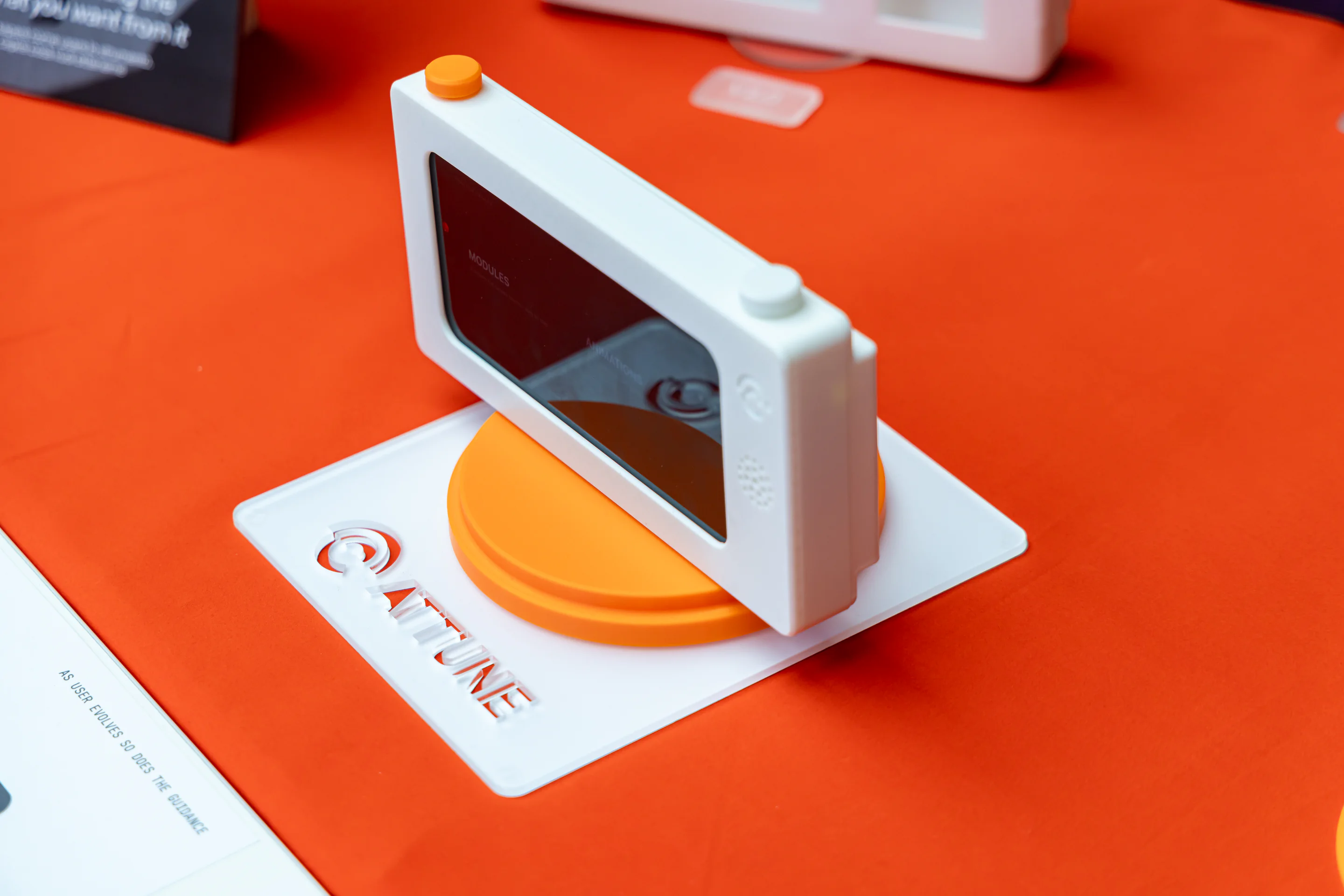
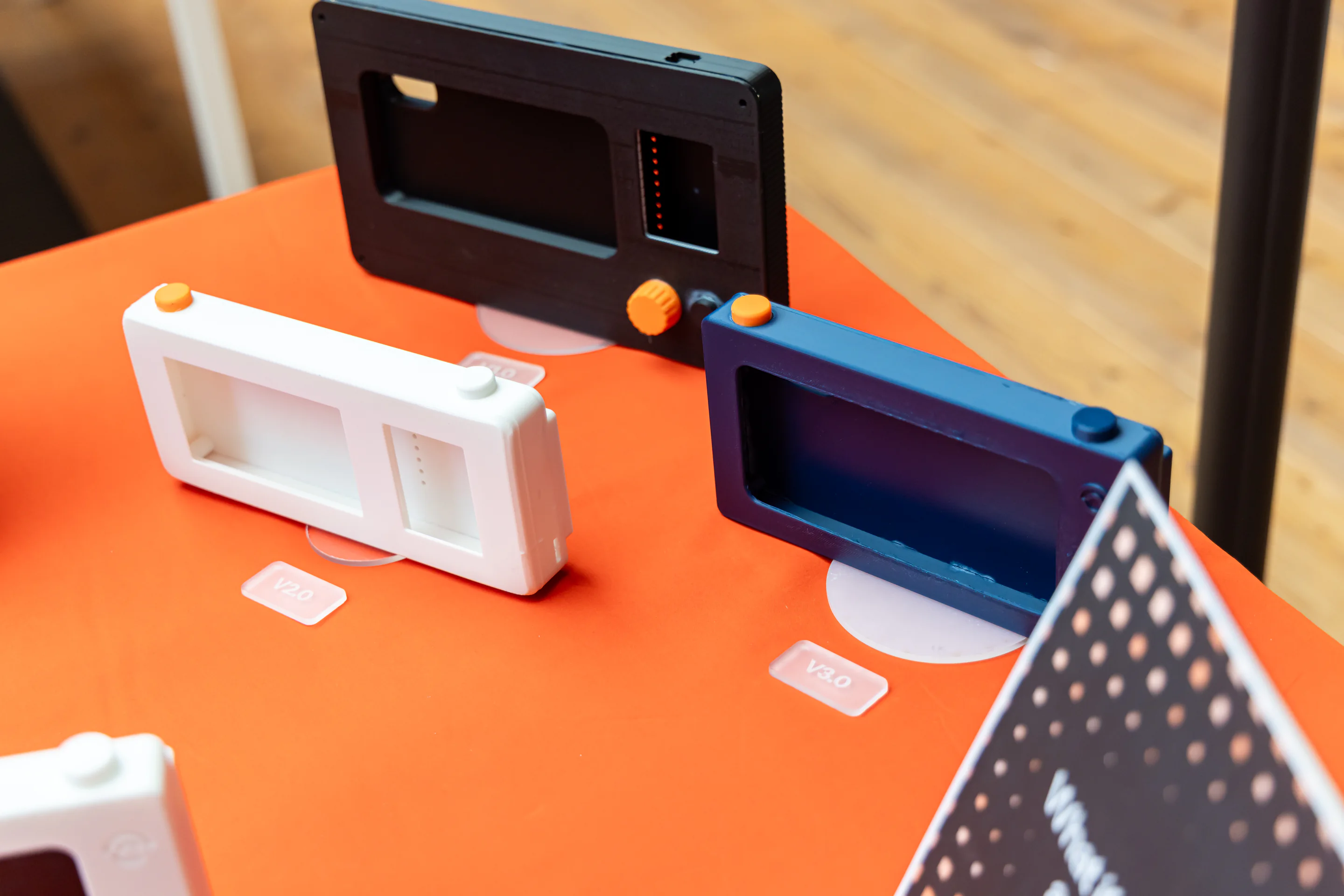
I explored different forms, proportions and control layouts to understand how Attune could feel familiar as a camera without simply replicating one.
Through rapid physical prototypes, I tested how the display, grip, shutter and dedicated controls relate to each other, gradually removing elements that added complexity without supporting the learning experience.


Making the idea physical
Testing how a phone, controls and a dedicated enclosure could become a camera-like learning object.
Reducing the object
Fewer components, clearer controls and a more direct relationship between the phone and the physical interface.
Fewer components, clearer controls and a more direct relationship between the phone and the physical interface.

Keeping only what supports learning
One focused interface with tactile controls, designed around observation rather than operation.
One focused interface with tactile controls, designed around observation rather than operation.


MOTION DESIGN
Attune responds to both the learner and the scene. Animations and micro-interactions make those responses visible, helping the learner understand what the system has noticed and why new guidance or controls are appearing.
Attune responds to both the learner and the scene. Animations and micro-interactions make those responses visible, helping the learner understand what the system has noticed and why new guidance or controls are appearing.
GENERATIVE INTERFACE
Instead of fitting every response into a predefined UI, Attune lets the response determine the interface. Depending on what the learner needs in that moment, guidance can take the form of a visual cue, an explanation, an example or an interactive control.
Instead of fitting every response into a predefined UI, Attune lets the response determine the interface. Depending on what the learner needs in that moment, guidance can take the form of a visual cue, an explanation, an example or an interactive control.


Guidance through markers + text
Markers, labels and short prompts appear directly on the scene to draw attention to what matters.


Guidance becomes visual
It can generate visual examples, overlays and alternate ways of seeing the same scene.
Controls appear when they become useful
Controls appear to help you explore a concept, then step away as you learn it.
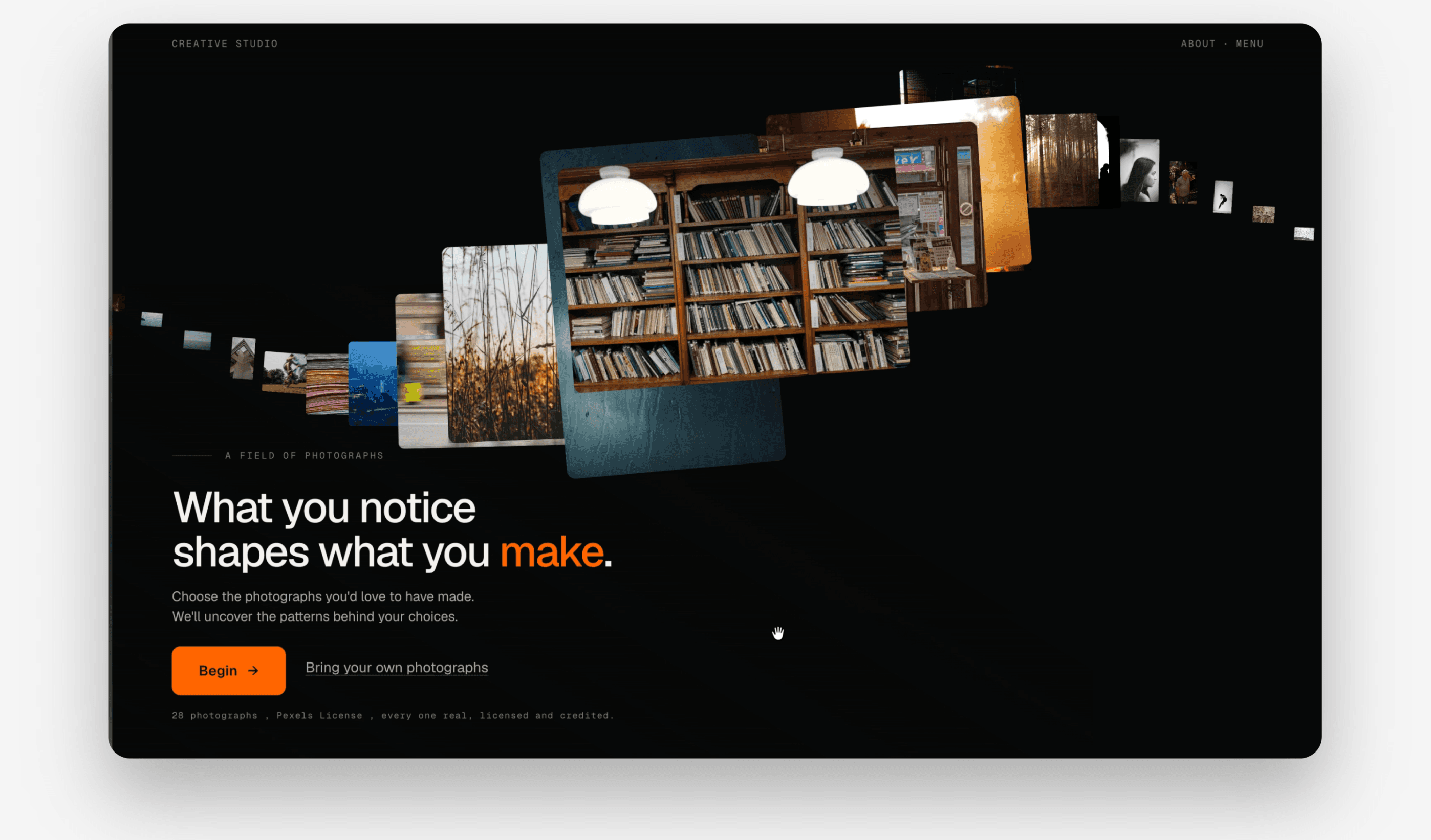
Choose between photographs instinctively. No right answer.
How Attune works behind the screen.
FUTURE POSSIBILITIES
Attune could extend into different areas of photography by changing what it pays attention to and the possibilities it surfaces. In portrait photography, it might help someone explore how lighting, pose or framing changes the character of an image.
In landscape photography, it could reveal different approaches to depth, perspective, atmosphere or visual treatment.


REFLECTIONS
Attune is designed to improve judgment, not create dependence. The next questions I’d test are less about the interface and more about what happens as the guidance disappears.
Attune is designed to improve judgment, not create dependence. The next questions I’d test are less about the interface and more about what happens as the guidance disappears.
01
Does the user notice things without the cues?
02
Does the guidance fade at the right time?
03
Does the user develop their own style?
Work with me
Naman Jain, Visual + Interaction Designer
I design how things behave, from digital interfaces and systems to physical interactions, so complex ideas become clear, useful and satisfying to use.
Open to full-time design roles in Europe or remote (I’m based in Bergamo, Italy, and open to working remotely or relocating within Europe. I’ll need visa sponsorship.)
I like to try an idea early, whether that means making a few clickable screens in Framer or wiring up an Arduino circuit.
At NH1 Design, I worked on client websites and design systems. At CIID, I got more hands-on with electronics and learned how to build AI into interactive prototypes.
Education